
5 Ways Clinical Teams Can Drive Better Patient Outcomes in Post-Stroke and Parkinson's Rehabilitation
Despite rapid advances in neurorehabilitation, many post-stroke and Parkinson's patients still experience preventable complications, readmissions, or stalled progress.
Speech-language pathology (SLP) plays a critical and sometimes underestimated role in these outcomes, particularly in dysphagia management, language recovery, and cognitive-communication rehabilitation.
Here are five research-backed, clinically actionable ways interdisciplinary teams can improve outcomes starting immediately.
1. Prioritize the Swallowing–Mobility Link
Although mobility receives the bulk of early rehabilitation attention, dysphagia is independently associated with pneumonia, higher readmission risk, malnutrition, dehydration, and longer hospital stays.
Research consistently shows that dysphagia after stroke is linked with higher rates of aspiration pneumonia, mortality, and longer length of stay, while early dysphagia screening and management can reduce pneumonia and mortality in stroke populations.
Physicians should ensure an automatic early SLP consult for any patient with a wet or gurgly voice, coughing or throat clearing during or after meals, globus sensation or multiple swallows per bite, prolonged mealtimes or unexplained weight loss, or a known stroke or Parkinson's diagnosis.
Studies demonstrate that post-stroke pneumonia carries significant risk factors and that dysphagia prevalence correlates with both pneumonia and mortality in acute stroke patients. Early, consistent dysphagia therapy, including evidence-based exercise protocols and compensatory strategies, can significantly reduce complications and shorten length of stay.
2. Overcome the "Therapy Cliff" With Research-Backed Intensity
Most patients receive therapy in disproportionately small doses compared to what research indicates is necessary for neuroplastic change. Constraint-Induced Aphasia Therapy (CIAT) and related intensive language programs like Intensive Language Action Therapy demonstrate greater language gains when delivered in high-intensity, massed-practice formats compared with lower-frequency schedules.
Multiple studies confirm that dose and intensity are critical variables in predicting treatment outcomes, with repeated intensive interventions showing measurable benefits even in chronic aphasia.
The clinical policy gap is stark: insurance limitations often restrict therapy to 1–2 sessions per week, which is misaligned with the intensity used in most successful research protocols.
Clinical teams should encourage short-term intensive bursts (e.g., 3–5 sessions per week for several weeks when medically appropriate), group treatment models post-discharge to increase repetitions without drastically increasing cost, and telepractice with structured home programs to sustain massed practice when in-person services are limited.
These strategies help patients bypass the "therapy cliff," where progress stalls due to inadequate therapeutic dosage.
3. Utilize Vocal Biomarkers for Early Diagnosis & Progress Tracking
Voice changes often precede or parallel motor symptoms in Parkinson's disease and can reflect recovery or decline after stroke or TBI.
Recent machine-learning studies show that acoustic voice features such as jitter, shimmer, and pitch variability can differentiate Parkinson's disease from healthy controls with high accuracy, supporting voice as a noninvasive biomarker for early detection and monitoring.
Additional research confirms voice analysis as a powerful diagnostic tool and demonstrates practical applications for early diagnosis using machine learning. Systematic reviews highlight vocal phenotyping as an emerging tool across neurological and psychiatric conditions, including Parkinson's.
Providers should encourage basic voice screening using simple smartphone or clinic-based recordings during follow-up visits, integration of acoustic analysis tools into telehealth workflow for Parkinson's and post-stroke patients, and early referral to SLPs for voice and speech intervention (e.g., SPEAK OUT!-based or intensive voice programs) when hypophonia, monotone speech, or reduced prosody is first noted.
Vocal biomarker technology is rapidly evolving and can become a low-cost, scalable adjunct for earlier identification of decline and for tracking treatment response over time.
4. Integrate Cognitive-Communication Screening Into Every Follow-Up
Cognitive-communication impairments are among the most under-identified consequences of stroke and Parkinson's disease, particularly when speech appears "normal" in brief encounters. Large stroke cohorts suggest that 20–60% of survivors experience persistent cognitive deficits in attention, memory, and executive function well beyond the acute phase.
Studies in post-stroke aphasia show that non-linguistic cognitive impairments (especially executive dysfunction) are common and strongly interrelated with language deficits and functional outcomes, with research confirming the utility of both verbal and nonverbal assessment tools and demonstrating critical relations between executive function, language, and functional communication in severe aphasia.
Integrate a 1-minute cognitive-communication red-flag checklist into routine medical follow-ups. Red flags include difficulty following multi-step medical instructions, noticeable word-finding pauses or circumlocutions affecting daily communication, new or worsening trouble managing medications or appointments, family reporting personality change or reduced judgment, and difficulty understanding complex information like consent forms or discharge instructions.
Patients meeting these criteria should receive an SLP cognitive-communication evaluation, which can help prevent safety events, hospital readmissions, and caregiver burnout.
5. Leverage Caregiver Training as a Clinical Intervention
Caregivers often determine whether therapy strategies are carried out consistently in the home, making them one of the strongest mediators of long-term outcomes. Supported Conversation for Adults with Aphasia (SCA™) and related communication partner training approaches improve conversational success and participation by training caregivers in specific facilitative strategies.
Research demonstrates positive outcomes when exploring supported conversation with familial caregivers, with practical frameworks available for implementation. Even a structured 90-minute caregiver training session focused on aphasia education and communication strategies has been shown to improve caregivers' perceived ability to support communication.
SLP-led caregiver training should include meal safety routines and texture/strategy adherence for dysphagia, supported communication techniques (e.g., written key words, pictorial supports, yes/no verification, extra processing time), environmental modifications to reduce noise and fatigue, clear and realistic home practice plans with built-in rest and repetition, and coaching caregivers on managing frustration while preserving patient autonomy.
When medical teams treat caregivers as active therapeutic partners, they see better adherence, fewer safety incidents, and more meaningful participation in daily life.
A Multi-Pronged Approach Makes Better Outcomes Possible for Stroke and Parkinson’s Patients
Improving outcomes in neurorehabilitation is not solely a matter of advanced imaging or pharmacology. It often hinges on behavioral, communicative, and swallowing interventions that are underutilized in busy clinical settings.
Interdisciplinary teams that identify and treat dysphagia early, align therapy intensity with neuroplasticity research, incorporate vocal biomarkers for earlier detection and monitoring, routinely screen for cognitive-communication deficits, and invest in structured caregiver training can help patients achieve faster, safer, and more meaningful recoveries after stroke or in the course of Parkinson's disease.
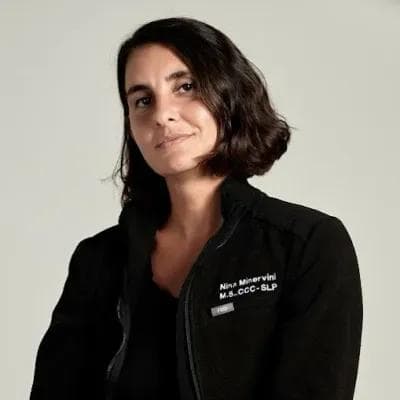
About Nina Minervini MA, CCC-SLP
Nina Minervini MA, CCC-SLP, Speech Language Pathologist, Palm Beach Speech Therapy