
Summary
Healthcare professionals face constant pressure to stay current, but finding the right continuing education can be challenging. This article outlines five practical strategies to pinpoint learning opportunities that directly address specific knowledge gaps, drawing on insights from experienced practitioners and educators in the field. These approaches help professionals move beyond generic courses to target their actual areas for improvement.
- Contributor
- Staff
- Published
- May 8, 2026
- Contributors
- AS
 JA
JA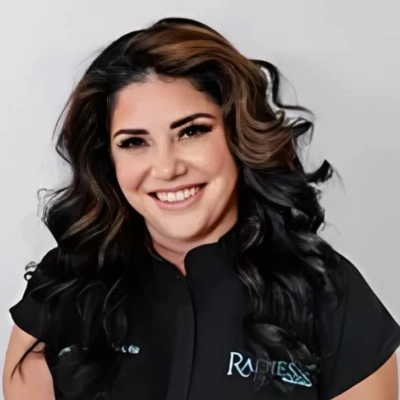 DK
DK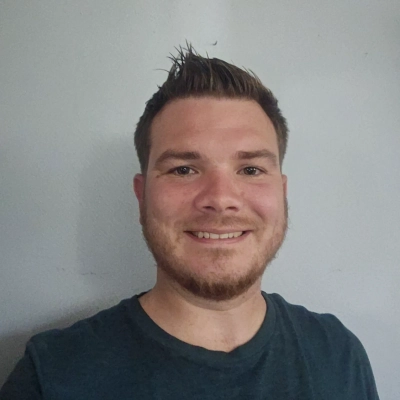 MH
MH JD
JD Alan Silberberg · Jennifer Adams · Darin King · May Han · Justin Dick
Ground Education in Patient Patterns
Alan SilberbergPresident, MD, Greater Austin Pain Center
The most accurate way I've found to identify meaningful continuing education is to tie it directly to real patient care challenges rather than relying on broad self-rating. It's easy to think you know where your gaps are, but the clearer signal usually comes from patterns you see in practice.
One approach that works well is reviewing cases that felt less efficient or where outcomes were not as strong as expected. If I notice repeated situations where I'm spending more time troubleshooting, referring out more often, or second-guessing decisions, that usually points to a knowledge gap worth addressing. Patient outcomes, complication rates, and even common questions that are harder to answer confidently can all highlight areas for improvement.
From there, I look for targeted education that directly applies to those gaps. That might be a focused course, a workshop, or even peer collaboration with someone who has more experience in that area. I also find value in informal case reviews and discussions with colleagues, which often surface practical insights that structured courses may not cover.
The key is keeping the process grounded in actual performance. When continuing education is driven by real-world patterns rather than general interest, it tends to be more relevant and impactful.
Audit Encounters and Test Competence
Jennifer AdamsVice President and Lead Clinical Educator, Texas Academy of Medical Aesthetics
Some healthcare professionals decide on the courses they take simply by choosing something that sounds enjoyable or that their friend took. But that doesn't really help in fixing the real skill gaps. The best way to identify your skill gaps is very straightforward: after caring for a patient, ask yourself three questions: What slowed me down? What did I have to look up? What would I do differently next time? After five to ten patients very often the same one or two gaps keep coming up. These are the skills you need to work on.
When you have identified your gaps, find training that not only teach you but also assess your skills before and after the training. Just listening to a lecture is not really very effective. At TAMA we give you a test. Our approach allows people to get more than 60 percent improvement. Don't guess anymore. Use your work as a guide to what you should learn next. After that ensure that you have actually learned the new knowledge or skills.
Let Client Surprises Guide Growth
Darin KingClinical Director, Darin King Counseling
As an LPC who specializes in trauma, EMDR, and complex PTSD, I notice my knowledge gaps the most when a client surprises me. Someone comes in within my specialty, but they present with a symptom or concern that doesn't quite fit how I've been thinking about things. That moment of being puzzled is actually the most valuable diagnostic tool I have for my own development. It tells me exactly where I need to grow.
My approach to continuing education is two-fold. I keep deepening my expertise in my primary specialty areas like trauma, EMDR, and the impact of childhood abuse. But I also intentionally supplement with training in areas that complement that primary work. The supplemental piece has been just as important as the deeper specialty work, sometimes more so.
A specific example: I was working primarily with adult survivors of sexual abuse and childhood trauma, and I started noticing a pattern. A lot of these clients were stuck in ruminating thoughts and trauma responses that looked a lot like OCD or had clear OCD-like features. My existing trauma training wasn't fully equipping me to address what was showing up in session. So I sought out OCD-focused training, which changed my work significantly. It also reinforced something I believe more and more as a clinician: trauma can present as other diagnoses when really, it's a nervous system stuck in the trauma response.
The biggest lesson from all of this has been to slow down and really get to know the client in front of me before I assume the diagnostic framework. The clients who teach me the most are the ones who don't fit cleanly into a category I already understand. That's where my best self-assessment comes from. Not from a checklist or a CE catalog, but from staying honest with myself when something in session doesn't add up.
Darin King, LPC, Founder of Darin King Counseling
Follow Somatic Cues Choose Experiential Methods
May HanFounder, Spark Relational Counseling
As an AAMFT Approved Supervisor and Northwestern alum, I identify knowledge gaps by tracking the "self-of-the-therapist" through mindfulness during sessions. I pay attention to when my nervous system feels "numbed out" or "on edge" during complex cases involving intergenerational trauma or cross-cultural dynamics.
This somatic awareness is my most accurate self-assessment; if I find myself on "autopilot" with high-achieving clients, it signals a gap in my ability to facilitate a corrective emotional experience. For example, when I felt stuck helping children of immigrants reconcile cultural guilt, I realized I needed deeper tools to navigate the intersection of shame and identity.
To bridge these gaps, I prioritize experiential models like AEDP (Accelerated Experiential Dynamic Psychotherapy) which focus on tracking physiological shifts in real-time. I seek out continuing education that includes supervised video review and role-plays to transform abstract concepts into sharp, relational interventions.
Enforce Publishable Standards on Assumptions
Justin DickDoctor of Chiropractic, Clear Life Scoliosis And Chiropractic Center
Our self-assessment process starts with our own published research. Each peer-reviewed paper we complete exposes the boundaries of what we actually know versus what we assumed. The literature review process forces a rigorous audit of current evidence that no CME or CEU course replicates. When we cannot confidently defend a clinical assumption in a manuscript, that gap becomes the next educational priority.
We deliberately cross into adjacent medical societies rather than staying within our specialty. Engaging with researchers outside chiropractic has exposed clinical frameworks we would never have encountered inside our own specialty's continuing education ecosystem.
The most accurate self-assessment tool we have found is asking: "could I teach this at the level of a peer-reviewed paper"? If the answer is no, that is a knowledge gap. We apply that standard across scoliosis biomechanics, cervical spine rehabilitation, and motor vehicle collision injury. This is why our continuing education choices consistently cross into medical journals, international research conferences, and collaborative publication with researchers from other disciplines. We do this rather than staying within the minimum required hours of specialty-specific coursework.