
Summary
Persistent symptoms can leave patients frustrated and clinicians searching for answers. This article shares practical ways to revisit complex cases, strengthen communication, and keep care moving forward. Insights from experienced clinicians offer clear guidance on rebuilding trust while uncovering missed clues.
- Contributor
- Staff
- Published
- October 27, 2026
- Contributors
- DC
 AC
 DR
 SG
 DD
 DG
 AS
 DK
 Dr. Cameron Rokhsar MD FAAD FAACS · Aja Chavez · Dr. Ryan Peterson · Sujatha Gerineni · Dr. David Ghozland · Dr. Gail Clifford, MD, MMM, CPE, FACP, FHM · Asma Shahid Khan, MD · Dr. Kim Bell PT, DPT · Charles Davenport Psy.D. · Zaher Merhi · Andrzej Kulesza · Ashley Simpson Davies · Dr. Craig Mortensen DC, IFMCP, QME · Dr. Talha Qadir BDS, RDS · Dr Usman Barkat PT · Will Kalla · Deanna Woodroffe WHNP-BC · Dr. Zeljko Kojadinovic MD, PhD
Show the Differential and Next Steps
Dr. Cameron Rokhsar MD FAAD FAACSFounder & Medical Director, New York Cosmetic Skin & Laser Surgery Center
When a rash or lesion fails to respond, I assume my first diagnosis may be wrong, and I say that out loud. Patients relax when I tell them that treatment failure gives me information. It does not mean they imagined anything.
I start by asking what the patient has tried and what happened. Then I ask what they fear it is. That second question surfaces worries I would never guess, such as cancer, an allergy to their job, or a contagious infection. Answering the fear directly builds more trust than any amount of reassurance.
Then I re-examine from scratch. I take the patient's own photos from the worst days, because skin often looks different in my office than it does at home. I recheck the medication list and every product they apply. In dermatology, the usual reasons a first diagnosis fails include contact dermatitis hiding under an eczema label, folliculitis mistaken for acne, a fungal infection treated with steroids that masked it, and early cutaneous lymphoma imitating chronic eczema. Each of these needs a different test. I order a patch test, a culture, a fungal scraping, or a biopsy instead of prescribing a stronger version of the same treatment.
The habit that improved these visits most is writing the differential on the after-visit sheet. The patient sees the three possibilities I am weighing, what test separates them, and when we will meet again. A patient who knows the plan stops feeling dismissed, because the plan shows I am still thinking about their problem.
Reframe Care With Teen Input
Aja ChavezExecutive Director, Mission Prep Healthcare
With teens, I say we're 'updating our understanding' rather than implying we missed something. It works. They open up more and talk about their daily struggles in their own words. I also get family input before changing approaches or adding things like EMDR. When everyone's perspective counts, the care adapts to what they actually need, not the other way around.
Simplify Follow-Up Scheduling
Dr. Ryan PetersonBoard Certified Physician, NuView Treatment Center
When symptoms persist, I would make time to hear what has and hasn't changed, then reconsider whether the original diagnosis and care plan still fit. In my practice, the approach that has helped most is making follow-up easy to arrange. We let patients schedule their next appointment before leaving, which supports continuity and gives them a clear opportunity to return with ongoing concerns. That small change has improved patient satisfaction.
Reset Assumptions With a Fresh Map
Nothing erodes a patient's trust faster than a doctor trying to force real-life symptoms into a pre-cooked diagnostic box that clearly isn't working.
When an initial treatment plan completely flops, the absolute worst thing a clinician can do is double down or subtlely hint that the patient just isn't "following instructions." That is when people shut down and start looking for a new doctor. When a patient comes back and tells me they feel zero difference... or worse, feel worse... I treat it as valuable clinical data, not a personal failure or a confrontation.
My go-to strategy is to literally hit the reset button right in front of them.
I physically open a blank page or a fresh note in their chart, look them in the eye, and say: "Okay... option A didn't give us the answers or the relief we wanted, which means our original hypothesis was either incomplete or flat-out wrong. Let's throw out the assumptions and build a fresh map together." That simple shift completely flips the dynamic. It transforms a frustrating roadblock into a collaborative investigation.
I ask them to retell their symptom story from day one... but this time, without the clinical labels we previously slapped on it. You would be amazed at how many critical details get left out of a first visit simply because the patient was anxious or trying to guess what I wanted to hear. By explicitly giving them permission to question the original plan, they reveal subtle nuances... a secondary symptom, a timing detail, a hidden dietary trigger... that instantly opens up a totally new differential diagnosis.
Validating their frustration is half the battle. I don't hide behind clinical jargon or defend my first guess. Medicine is an iterative science, not a crystal ball. Admitting that the first path didn't work... while showing a clear, enthusiastic willingness to keep digging until we find the root cause... gives the patient immense comfort. They leave the office knowing they aren't stuck with an ineffective label, and more importantly, that they have a dedicated partner who is actually listening to their body.
Invite a Blank-Slate Chart Review
Dr. David GhozlandOwner and OB/GYN, David Ghozland
When a treatment plan doesn't work, I shut the computer and sit where I can look my patient in the eyes. I make it very clear to my patient that it is the medicine that has failed, not them. Together we write down on paper everything that happens during their day (AM routine, PM routine, sleep habits, signs of stress, etc). As we go through this process, I listen for cues that may have been missed. Getting off center during this process takes the blame out of their pain. This also shows that doctor and patient are back in alignment.
I quote my patient verbatim as I write in my charts in order for a covering doctor to get a sense of who this person normally is. For difficult diagnoses or treatment impasses I have my charts looked at by a trusted colleague without first giving them information about the case (blank slate chart review). Their fresh look at my notes often leads them to ask completely different questions which then leads me to question my own assumptions and look harder for little clues that I may have missed on previous visits. It also helps my patient to hear two doctors discuss their care. They walk away certain their pain is real and warrants thorough exploration. Blank slate chart review has saved more than one impasse for me.
Validate Symptoms Amid Uncertainty
Dr. Gail Clifford, MD, MMM, CPE, FACP, FHM Medical Consultant, Paramount Wellness Retreat
When symptoms persist, I treat the deviation between the expected and actual course as meaningful information. I reconstruct the patient's symptom timeline, confirm what treatments they completed and tolerated, and compare symptom patterns with objective clinical trends, examination findings, and treatment response. Persistence does not automatically prove that the original diagnosis was wrong, but it should prompt a deliberate diagnostic pause. That review should include alternative or coexisting diagnoses and possible medication side effects. A normal result also should not be used as shorthand for "nothing is wrong." It answers a particular clinical question while the patient's symptoms may still require explanation. Crucially, I separate certainty about the patient's experience from certainty of the cause. I can be clear that their symptoms are real while acknowledging incomplete explanations, and I ask what they believe is happening and what they fear is being missed. Those answers can reveal priorities or details that a standard symptom checklist may not capture. That distinction helps keep uncertainty from sounding dismissive. I then state what the available evidence does and does not show, identify the immediate clinical priority, and ask the patient whether my explanation addresses their main concern. The conversation should also establish the next steps, when to reassess, and which symptoms need earlier or urgent review. This makes the conversation collaborative without overstating diagnostic confidence.
Listen Fully, Then Reflect Back
Asma Shahid Khan, MDPrimary Care Physician, Apex Primary Wellness
When symptoms persist, I start by acknowledging the patient's experience: "You're still not feeling better, and that deserves another look." I want the patient to know that returning with the same concern is useful information, not an inconvenience.
I revisit the timeline, ask what has changed, and explore how the symptoms affect daily life. I also ask what was manageable or difficult about the initial care plan, without assuming the patient did something wrong. Then I reconsider whether the original diagnosis still fits, review medications and previous results, and repeat the relevant examination. Additional testing or a referral should answer a specific clinical question.
The approach I would emphasize most is listening without interruption, then summarizing what I heard before discussing next steps. Saying, "The pain is unchanged, but now it is waking you at night. Have I understood that correctly?" gives the patient a chance to correct me and makes clear that their account is shaping the reassessment.
I explain what we know, what remains uncertain, and what would make us change direction. Before the visit ends, we agree on a follow-up timeframe, who will communicate results, and which changes require earlier attention. Patients should leave knowing that uncertainty comes with a plan and that their concerns remain part of it.
Trace Clues Through the Full Timeline
Dr. Kim Bell PT, DPTVestibular Physical Therapist, Kim Bell Physical Therapy, Inc.
When a patient's symptoms persist despite an initial care plan, I think that is important information. Rather than assuming the patient simply needs more of the same treatment, I go back and revisit the case from the beginning.
With dizziness and vertigo, there is often more than one contributing factor. I ask patients to walk me through their entire story in chronological order, paying close attention to three key pieces of information: the onset of their symptoms, possible triggers, and the duration of each episode. I also want to know what has changed, what has improved, what has not improved, and whether there are symptoms that our current working diagnosis simply does not explain.
If the diagnosis does not account for the patient's whole story, then I believe the root cause investigation is not finished yet. Sometimes the original diagnosis is correct, but there is another contributing factor that has been missed.
The approach that has most improved these conversations in my practice is simply taking the time to listen. Many of my patients come to me after seeing multiple providers, and they often feel that no one has heard their whole story. I want to give them the space to tell me what they have experienced and know that I am listening and ready to help.
That combination of listening carefully and then going back through the case like a detective can uncover important clues. For me, persistent symptoms are not something to dismiss. They are a reason to keep asking, "What are we missing?" until we have an explanation that accounts for the patient's symptoms as completely as possible.
Ask What You May Have Missed

Charles Davenport Psy.D.Licensed Psychologist, Davenport Psychology
I start by saying out loud what the patient is already thinking. Something like, "We've been at this for a couple of months and you're not feeling much better. That tells me something, and it isn't that you're doing it wrong." People who aren't improving often assume they're failing treatment. Naming that early takes a lot of the defensiveness out of the room.
Then I go back to the beginning. Not the whole intake, just the original picture. What did I think was driving this, and what was that based on? Sometimes the first read was right and something new has come up since, like a job loss or a sleep problem nobody mentioned. Sometimes it was incomplete. Anxiety that won't budge can turn out to be ADHD, or trauma that didn't feel safe to bring up in a first session.
I'll often bring in formal psychological testing at this point. It gives us data instead of hunches, and patients tend to feel taken seriously when we slow down and actually measure.
What's helped most is one question: "What have I missed?" Then I wait. Patients usually know. They just haven't been asked in a way that made it feel safe to say.
Revisit Intake Notes With Clients

Zaher MerhiFounder & Medical Director, Board-Certified OB/GYN & Reproductive Endocrinologist, VELVA Sexual Longevity
When symptoms aren't improving, I start follow-ups by reading back what patients wrote on their intake forms. It changes the conversation. One woman's fatigue and dryness lingered despite hormone adjustments, so I brought up other diagnoses and new research, and we decided together what to try first. Took a few rounds, but we got there. Including her input just made everything faster and less stressful.
Make Clients Co-Investigators

Andrzej KuleszaCo-Founder & Medical Director, Zeus Detox & Rehab
In a detox and psychiatric setting, persistent symptoms are very common: anxiety, insomnia or low mood that continue well after withdrawal should have settled. The easy explanation is "it is still the withdrawal". Sometimes it is. Often it is an anxiety disorder, depression or untreated ADHD that the substance was masking for years.
When the plan is not working, I say it out loud first: "What we are doing is not helping enough, and that tells us something. It is not your failure." Patients with addiction are used to being blamed when treatment does not work, so naming that early changes the whole conversation.
Then I ask the patient for their own theory. "When did you first feel like this? Before the drinking, or after?" Their answer is frequently more useful than anything in the referral notes. I retake the history as if I were meeting them for the first time, and, with consent, ask a family member what the person was like at 15 or 20.
The approach that improved these conversations most is making the patient a co-investigator rather than a case being re-examined. People feel heard when their own explanation is taken seriously enough to be tested.
Use Digital Feedback to Guide Options

Ashley Simpson DaviesCo-Founder, Faces
When we revisit a treatment plan, I pull up their feedback from our digital consent system. It shows exactly how symptoms are affecting their daily life, so we start there instead of just my clinical notes. Going over their actual answers together makes it easier to talk through new options. Clients seem much more engaged. It turns awkward check-ins into straightforward conversations where we actually make progress.
Measure Progress Beyond Lingering Symptoms

Dr. Craig Mortensen DC, IFMCP, QMEFunctional Medicine Practitioner | IFMCP | Founder of Premier Integrative & Functional Medicine, Premier IFM
From the very first visit, I explain to the patient that healing is a process; we'll have ups and downs, and there will always be bumps along the road. This is the most important thing for the patient to understand. Patients who understand this, feel heard and a part of the conversation in every visit.
Every subsequent visit, we reassess how the patient is doing. One of the most powerful things we do is, together, look back at where they were when they first came into the office to see where the improvements are. Often the patient has made real progress that they may not have noticed because of other persisting symptoms. This really makes the patient feel heard; we have a conversation.
Revisiting the diagnosis may not be necessary. It is more about understanding how the symptoms have changed, how we can address them, what root causes we have already dealt with, and what is left to work on. The actual diagnosis may be right; it just involves more systems in the body than were initially apparent.
The initial care plan is just a step in a process with many steps along the way. That first step may be the hardest and biggest, but not always. I like to remind patients, "Sickness comes on horseback and leaves on foot."
Reexamine Early and Reinforce Confidence

Dr. Talha Qadir BDS, RDSRegistered Dental Surgeon, Brightway Oral Care
I added it as one line, straight after the patient's calls, where it shows you revisiting the diagnosis. Everything else is as before.
Reassurance, when you are confident in your treatment plan. From an empathetic point of view, and depend on individual cases, where some patients are more sensitive than others.
A particular patient of mine, came with a burning sensation in their mouth that first looked like burning mouth syndrome; the typical presentation included intolerance to spices.
Upon examination of the inside of their buccal mucosa of cheeks, my initial diagnosis came to cheek biting, caused by upper molars, due to less space in the oral cavity.
It's a very common cause, and it takes 3-4 weeks to heal properly, after her upper wisdom extraction; lower wisdom, were left as is, and were in my followup plan.
They followed the salt water rinses exactly as instructed, and stayed in touch the whole time.
Week 1 & 2, showed little to no signs of improvements to them, but I insisted on supplemental care during that time.
It was only by week 3, it was starting to subside, and week 4, it was noticeably better; but during the time from week 1-2, my patient contacted me every 2-3 days, saying they don't feel the difference, and the problem might be something else.
I re-examined her twice during those 2 weeks, to rule out anything I might have missed. But it was never true burning mouth syndrome; because it had a cause.
The approach that has helped me most: when symptoms persist, I explain the problem to the patient again and ask them not to lose trust, as long as I have complete trust in my own diagnosis.
Reassess Stalled Cases at Regular Intervals

Dr Usman Barkat PTPhysical Therapist, Health Content writer, PhysioUBK
When symptoms persist past the expected healing window, I stop and reassess instead of repeating the same plan louder. Often the real driver is something we missed: poor sleep, fear of movement, or a neighboring joint compensating. A fresh clinical look every few weeks is what separates stuck cases from recovering ones.
Name Frustration and Solicit New Details

Will KallaStructural Chiropractor & Creator of the R3NEW X™ Protocol, Dr Neck Pain
Your articles on chronic pain hit a real problem: patients plateau and stop improving. I can offer a guest piece on why naming a patient's frustration, then asking them to report new symptoms, changes how they engage with care. Most people get neck problems wrong: structure dictates function, and pain relief is not the same as a corrected neck. I'm a chiropractor with 29 years in practice, 20 in Singapore.
Provide Longer Visits and Direct Access

Deanna Woodroffe WHNP-BCBoard-certified Women's Health Nurse Practitioner and the Founder and Clinical Director, Vibrant Health of Colorado
First, I want patients to know that persistent symptoms don't mean they've failed, and they don't mean we're giving up. The body is complex. Sometimes the first plan addresses one piece of the puzzle, and we learn something important from what didn't change.
Many of our patients have spent years feeling like no one was listening. So when symptoms linger, the worst thing I could do is brush it off. I start by asking them to walk me through how they're feeling now, what's improved, what hasn't, and what feels different. Their experience is real information, and it guides where we look next.
Then we go back to the whole picture. In functional medicine, we view health as an interconnected network, so there's almost always another layer to explore. Symptoms like fatigue or anxiety can be connected to hormone imbalance, gut health, food sensitivities, thyroid function, blood sugar, low vitamin D, and more. If we started with one system, we may need to look more closely at another.
That often means more advanced testing. We believe in testing thoroughly, because it gives us answers instead of guesses. And if something needs a specialist's evaluation, we'll refer to one. Our goal is always to find the cause, wherever that leads.
I'm also honest with patients about what we know and what we don't yet know. I'd much rather say "let's dig deeper together" than pretend to have every answer on the first visit. That honesty builds trust, and it makes patients true partners in figuring things out.
The approach that has improved these conversations most is simply having more time. Since we moved into a membership or direct primary care model, our providers have longer appointments and patients can message their care team through the patient portal. Instead of waiting months to say "this still isn't better," patients can reach out, and we can adjust sooner.
That ongoing connection changes everything. Patients don't feel like they're starting over each time. They feel like someone is staying with them through the process.
When we finally find what's been driving their symptoms, the relief is incredible. For many patients, it's the first time in years they've felt heard and had real hope. Nothing is more satisfying than watching people heal and get their lives back.
Explain Anatomy Behind Chronic Pain
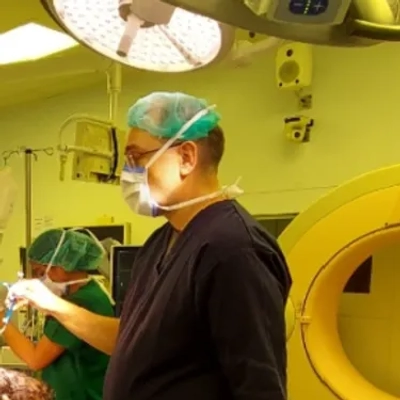
Dr. Zeljko Kojadinovic MD, PhDNeurosurgeon & Pain Management Specialist, Neurosurgery & Pain Management
When pain persists despite treatment, whether in my own patients or those seeking a second opinion, I begin by listening more carefully rather than immediately recommending another treatment.
In my experience, MRI and CT often fail to reveal the actual source of persistent pain. Scans may show degenerative changes unrelated to the symptoms, while the painful ligament, joint, muscle, fascia, or irritated nerve may not show a clear abnormality.
A detailed, anatomically guided conversation can often reveal what imaging cannot. I ask patients to describe exactly where pain begins, where it spreads, and what provokes or relieves it. I guide them through specific movements and ask them to press particular anatomical points with a finger to see whether their familiar pain is reproduced or changes. These guided functional observations are an integral part of the diagnostic conversation.
I organize this assessment around three questions: Which structure is generating the pain? What process is occurring within it? And which contributing factors are maintaining or aggravating the problem?
For example, a patient with low back pain may have degenerative discs on MRI, while the dominant pain source is an irritated sacroiliac ligament. Prolonged sitting, mechanical overload, obesity, metabolic disturbances, poor sleep, or psychological distress may contribute without necessarily being the primary cause.
I specifically ask about these contributing factors because many patients have never been questioned about them. Equally important is understanding what previous treatments achieved, how long improvement lasted, and why symptoms returned.
I also avoid automatically attributing treatment failure to age, excess weight, degeneration, posture, or emotional state. These factors may matter, but their actual role must be established.
What has most improved these conversations is explaining my diagnostic reasoning to patients: what we have identified, what remains uncertain, and why the next step makes sense. Patients feel heard when their experiences become essential diagnostic information rather than being dismissed or blamed.