
Summary
Building strong professional relationships across medical specialties can transform patient care and advance careers, yet many physicians struggle to create these vital connections. This article presents five practical strategies for developing interdisciplinary networks, drawing on insights from experienced healthcare professionals who have successfully bridged specialty divides. These approaches range from collaborative case management to engaging in policy discussions with colleagues from different medical backgrounds.
- Contributor
- Staff
- Published
- September 11, 2026
- Contributors
- SE
 BF
BF CS
CS KF
KF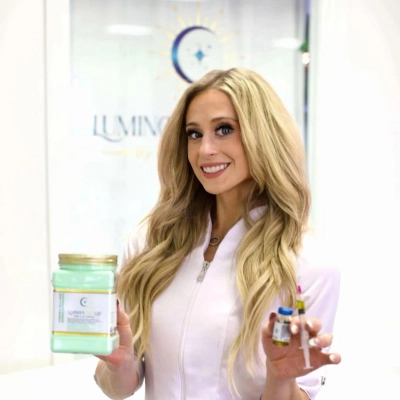 SJ
SJ Sandy Eulitt · Ben Frederick · Charles Smith · Katelyn Fitzgerald · Sunny Jha
Unite Through Healthcare Advocacy
Sandy EulittCEO and Founder, Life Backup Plan by Galacxia, Inc.
Interdisciplinary networking amongst physicians and healthcare professionals is something that administrators and vendors can try to craft with intentional after work social opportunities or programming, but I think one of the more organic ways to breed more impactful cross-specialty connections is in the advocacy space.
Whether looking at expanding critical access in rural communities, eliminating friction points across information silos for patients traveling across healthcare systems or providing meaningful transparency regarding coverage and cost of care, the issues patients face regarding quality, access and cost of their care is something that unites healthcare professionals across specialties and drives organic networking and meaningful collaboration. Assessing the care climate in the local, regional and statewide populations is a natural incubator for physicians connecting about the services they offer and deliver.
When providers join their own specialty colleges as well as larger multi-disciplinary physician groups, there is a space for coming together and networking to navigate the big headwinds that are facing healthcare. Get up, Show up, Speak up. There is plenty of work to be done in healthcare, and it is easier with a rich network of providers across a variety of specialties and care delivery systems.
Bring Problems and Report Outcomes
I come at this from the product side of healthcare rather than from a clinic, so I'll answer for the pattern I trust. The cross-discipline conversations that produced anything all started with one stubborn, specific problem. The ones that started with an introduction produced a contact and stopped there.
When I bring a single unresolved problem to someone trained completely differently—a clinician, a chemist, a designer—and ask them to describe how they'd attack it in their own vocabulary, I usually walk out with a testable next step inside a week. Their training makes them see a constraint I've stopped noticing because I've looked at it for years. That fresh set of constraints is what the other discipline gives me.
The part I don't skip is reporting back. I tell the person what I did with their input and what happened, good or bad. That single follow-up is what converts a one-time favor into someone who answers the phone next time, because they can see their thinking went somewhere.
If I were a physician trying to replicate it, I'd pick the case that has been irritating me the longest, find the specialty sitting closest to it, and ask for 20 minutes with that one question. Then I'd send them the outcome.
Build Trusted Teams Before Crises
Charles SmithMedical Director, Agape TC
As an addiction medicine specialist, I always value professional connections that combine addiction medicine with primary care, psychiatry, behavioral health, and social work. Substance abuse is multifaceted and requires a unique approach that addresses various risk factors and other comorbid conditions, rather than treating the addiction in isolation. The biggest success comes when we come together across specialties to develop and implement a care plan. For other physicians who want to get more involved with cross-specialty work, I suggest reaching out to other specialties to make connections before a patient emergency occurs. Creating a small community of trusted colleagues that you can call directly for their advice is very helpful. Interdisciplinary networking is often most successful when you are focused on solving one particular problem or patient concern, rather than merely exchanging contact information at a conference and forgetting about it.
Co-Manage Cases to Build Trust
Katelyn FitzgeraldFounder & CEO, Luminous Skin Lab
Hey, I'm Katelyn Fitzgerald, a Master Licensed Esthetician and Certified Laser Technician with more than 16 years of hands-on clinical work, and the founder of Luminous Skin Lab. I've built my career across medical spas, wellness centers, and advanced aesthetic practices, and I'm happy to contribute my perspective on this one, since cross-specialty relationships shaped how I practice and how I build products.
The most useful connection I ever made wasn't at a conference. It was in the treatment room, when a plastic surgeon I shared clients with called to ask why one of his post-op patients healed faster than the rest. The answer was the barrier-focused protocol I'd been running before and after her procedures. That one phone call turned into a standing referral relationship. He sent me patients for pre-surgical skin conditioning, and I sent him people whose concerns needed a scalpel, not a serum.
What came out of it went beyond referrals. Sitting in on his post-op recovery conversations changed how I thought about inflammation and healing timelines. That thinking eventually fed into the formulation choices we made at Luminous Skin Lab, where barrier support drives everything. I also connected with a functional medicine practitioner along the way, which taught me how much gut health and stress show up on the face.
Here's how anyone can replicate it. Stop networking at people and start solving a shared problem. Find the professional who touches the same client before or after you do, then bring them something specific and useful. Ask about their outcomes, not their business card. Offer to co-manage one patient and let the results build the trust. The strongest cross-specialty relationships I have all started with a single case we worked through together, not a pitch.
Debate Policy With Diverse Peers
Sunny JhaPresident, SJMD Solutions
I came up through the AMA's Medical Student Section and later its Resident and Fellow Section, and the value was in who was in the room. Students, residents, and attendings from different regions, different training backgrounds, different specialties, all arguing over the same policy. You cannot debate at that level without walking away with a deeper sense of how complicated healthcare and public health actually are. My network grew, but so did what I understood. Some of the people I met across that table became mentors, and a few became close friends.