Summary
Poster sessions at medical conferences can lead to valuable research partnerships when approached with purpose. This guide shares six practical strategies, including expert insights on asking sharper questions, presenting clear ideas, and building strong collaborations. Learn how to turn brief poster conversations into meaningful research opportunities.
- Contributor
- Staff
- Published
- October 16, 2026
- Contributors
- DC
 CT
CT BF
BF ZM
ZM TT
TT KF
KF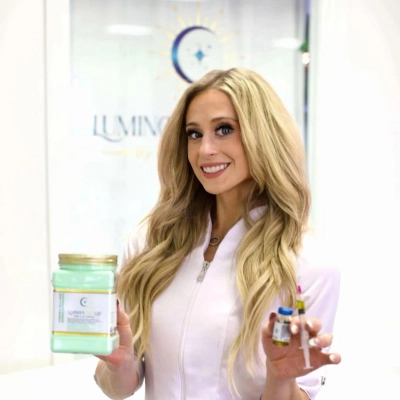 Dr. Cameron Rokhsar MD FAAD FAACS · Corina Tham · Ben Frederick MD · Zaher Merhi · Talya Turgeman · Katelyn Fitzgerald
Select Posters and Question Their Limits
Dr. Cameron Rokhsar MD FAAD FAACSFounder & Medical Director, New York Cosmetic Skin & Laser Surgery Center
I plan poster sessions the way I plan a clinic day. Before the meeting, I scan the abstract book and mark six to eight posters that touch problems I face in practice, such as laser parameters for darker skin types, post-procedure pigment outcomes, or energy device safety data. I skip the rest. Walking every aisle wastes the one resource that matters, which is attention.
At each marked poster, I read the methods and the limitations box first. Results tell me what the authors want me to believe. Methods tell me whether I can trust it. Sample size, follow-up length, and which skin types the authors enrolled decide whether the finding applies to my patients.
The interaction strategy that works best for me is a specific question about the limitation, not a compliment. I ask something like what the authors would change if they ran the study again, or whether they saw the effect hold in Fitzpatrick types IV to VI. Presenters light up at that question, because most visitors only skim the headline. The conversation moves quickly from the data to the study they wish they could run next, and that is where collaboration starts. Clinicians with patient access meet researchers with protocols, and both sides see the gap.
I close every exchange by photographing the poster and writing the follow-up on my phone before I leave the aisle. An email within a week keeps the conversation alive. After a month, the presenter has forgotten the details and so have I.
Use an Elevator Pitch to Expose Problems
Corina ThamSales, Marketing and Business Development Director, CheapForexVPS
1. Use your poster as the opening sentence of a possible conversation, rather than reading the entire abstract of your paper to everyone who stops to look at it. I like to have a 30-second 'elevator pitch' ready for such occasions and then ask the person who has stopped to look at my poster what brought them to my particular poster. The answer to this question can help to determine whether the person in question is a possible future collaborator, a mere casual observer or even someone who is grappling with the same problems and puzzles that I am trying to solve. Before my own session, I like to walk around the poster hall and see who is presenting near to me and on what. This allows me to work out who in the surrounding area would make good people to invite to my own poster and, after my session, I like to go back to each of the posters that I have visited and write a few notes on the back of each abstract to remind myself of the things that we discussed and of the one or two things that the author of that particular paper seemed to care most about.
2. Instead of congratulating the findings of a poster, ask about the problem that the results on the poster solved. Most people thank you for your congratulations and you are done. But by asking about the hard part of developing the work that you just praised, they relax and start to explain to you the stalled recruitment, the mess with the data, or the nasty partner they had to work with. This is where the real overlap is. I have a very good working relationship with one of my colleagues because of a 10 minute conversation where we complained about a shared problem. This was followed by a coffee the next morning and a phone call a week later. Complaining about problems that you both try to solve in your work creates trust much faster than congratulating solutions to problems.
Offer Open Questions Through One-Page Briefs
I'd bring printed one-pagers to every poster session, but the ones that started conversations weren't summaries of my poster. They were single-page briefs on an adjacent problem I was working through, with a specific question I needed help answering. Handing someone a summary of work you've already finished gives them nothing to do except say "interesting". Handing them an open question gives them a reason to pull out their phone and email you the next week.
I prepare two or three of these open-question briefs before the conference and keep them separate from my main poster materials. Each brief names the specific gap in my data or method, not a broad topic. When someone stops at my poster, I walk them through the main work first, then ask if they have 30 seconds for a side question. When I ask for input on an open problem instead of presenting finished conclusions, people engage differently.
The follow-up matters more than the session itself. I'd send a short email within 48 hours referencing the exact question we discussed and any new thinking since the conversation, which is what has turned a forgettable exchange into a working relationship for me.
Propose Multicenter Cohort Studies Directly
Zaher MerhiFounder & Medical Director, Board-Certified OB/GYN & Reproductive Endocrinologist, VELVA Sexual Longevity
I scan the poster sessions for topics like AI in reproductive medicine, metabolic fertility, and ovarian rejuvenation. I usually walk right up to researchers, mention I'm running AI semen and ovarian trials, and ask if our patient cohorts could work together. We've actually kicked off some great multicenter studies that way. My advice is to be direct about what you need. That straightforward approach has led to more collaborations for me than anything else.
Explore Mutual Challenges Before Partnership
I maximize the value of poster sessions by treating them less like presentations and more like opportunities to diagnose a problem together. In metal finishing, some of our most productive conversations begin when someone brings us a component and explains why its current coating, durability, or finish is failing, and I would take the same approach at a medical conference: ask a specific question about the research rather than simply complimenting the poster. One interaction strategy that has worked well for me is sharing a closely related challenge I have encountered, then asking, "Have you seen anything similar in your work?" That question turns a one-way explanation into an exchange of practical experience. I have seen conversations that began around one technical issue reveal that each side had knowledge the other was missing, creating a natural reason to continue talking afterward. The best collaborations often start when you arrive curious enough to contribute something useful, but disciplined enough to listen before proposing what you could do together.
Connect Your Expertise to Research Goals
Katelyn FitzgeraldFounder & CEO, Luminous Skin Lab
Poster sessions at medical conferences are invaluable for fostering collaborative insight, but their true value lies in creating meaningful exchanges that go beyond passive participation. To enhance engagement, approach each interaction as an opportunity to exchange expertise rather than merely absorb information. For instance, in my years as a skincare and medical aesthetics professional, I've found that preparing specific, research-backed questions related to skin health or laser technology makes discussions more dynamic.
This often opens the door to sharing unique data or perspectives, such as insights I've gained on the role of post-treatment care in skin barrier recovery. At one conference, I initiated a conversation with a poster presenter about ingredient formulation challenges, which led to a collaborative trial of a novel peptide-based treatment. Being genuinely curious and tying your expertise to their work can result in partnerships that advance real-world applications. Focus on uncovering shared challenges and goals to transform a brief interaction into a longer-term professional alliance.